Three years of arguing about AI art online are about to run into an actual courtroom. One case just closed. One goes to trial next month. One was filed this year and hasn’t gotten there yet. Here’s what each one actually decided, or is about to.
The Case That’s Already Over: Thaler v. Perlmutter
Computer scientist Stephen Thaler built a generative AI system he calls the Creativity Machine. It produced an image titled “A Recent Entrance to Paradise.” Thaler tried to register the copyright and listed the Creativity Machine itself as the author, with himself as owner. He hadn’t prompted the system for that specific image and made no edits to what it produced.
The Copyright Office refused. The D.C. Circuit agreed with the Copyright Office. On March 2, 2026, the Supreme Court declined to even hear the case, which leaves the lower court’s ruling standing as the law: a copyrightable work has to have a human author. Fully AI-generated work, with no meaningful human involvement, doesn’t qualify. Full stop, at least until Congress decides to write a different rule.
This doesn’t touch the harder question. It says a machine can’t hold a copyright. It says nothing about whether the machine was allowed to train on your work in the first place.
The One Going to Trial: Andersen v. Stability AI
Illustrators Sarah Andersen, Kelly McKernan, and Karla Ortiz filed this one back in January 2023, against Stability AI, Midjourney, and DeviantArt together. The claim: these companies trained their models on millions of copyrighted images, scraped without consent, without payment, and without so much as a heads-up.
The case has been trimmed down since. The DMCA claims got dismissed. Judge Orrick dismissed the claims against Midjourney and DeviantArt too, though the plaintiffs got leave to amend and refile. What’s still standing, and heading to an actual jury, is Andersen’s claim that Stability AI’s use of her work to train Stable Diffusion was copyright infringement. Trial starts September 8, 2026.
One detail from discovery is worth sitting with. Leaked internal documents reportedly showed Midjourney employees keeping a curated list of over 16,000 artists whose specific styles they wanted the model to be able to imitate. Not a broad dataset that happened to include artists. A list, with names on it, built on purpose.
The New One: Midjourney, Again
Early 2026 brought a fresh class action aimed specifically at Midjourney, alleging its training dataset was built by scraping more than 100 million images from ArtStation, DeviantArt, and personal portfolio sites. If you’re a working fantasy illustrator, those aren’t three random platforms. That’s probably where your own portfolio lives right now.
Separately, and with a strange bit of symmetry, Disney, Universal, and Warner Bros. are suing Midjourney too, in a case that’s currently in discovery. Midjourney’s defense strategy reportedly includes trying to force the studios to disclose their own internal AI use. Everybody scraping everybody, arguing about who scraped worse.
What This Actually Means Right Now
Nothing is settled yet. Thaler answered one question (a machine can’t own a copyright) and left the bigger one open (can a machine train on your work without asking). That answer comes out of a California courtroom starting next month, and even then, only for Stability AI specifically, not the whole industry at once.
What doesn’t wait for a verdict: your own work, commissioned directly, drawn by a person you can actually talk to, was never part of any of these lawsuits to begin with. That’s not a legal argument. It’s just true.
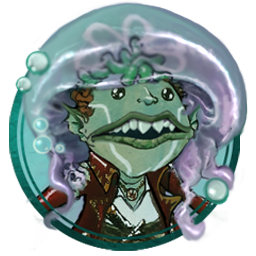
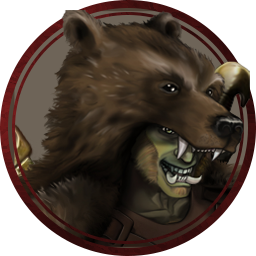
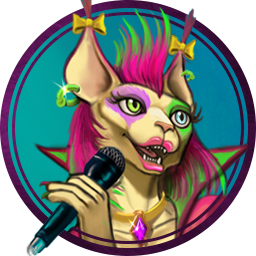
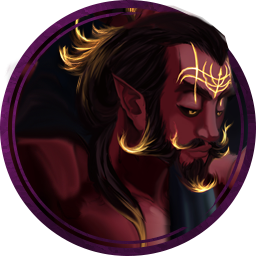
Free VTT Pop-Out Token with every commission

Like What You Read?
Commissions are open. Book your character through my queue.