Wizards of the Coast has a stated policy against AI art. Wizards of the Coast has also been caught using AI art four separate times in eighteen months. Both of those things are true at once, and the gap between them tells you more about the fantasy art industry right now than either fact does alone.
Four Times in Eighteen Months
August 2023: fans noticed artwork in the sourcebook Glory of the Giants looked AI-generated. The artist confirmed it in tweets that got deleted shortly after. Wizards updated its artist guidelines to explicitly ban AI in the creation process.
December 2023: fans accused art in the 2024 Player’s Handbook of being AI-generated. This time they were wrong. Artist Nestor Ossandon provided work-in-progress sketches to prove the piece was hand-drawn, and Wizards backed him publicly.
January 2024: AI art turned up in a Magic: The Gathering marketing image. Wizards denied it. Two days later, Wizards admitted they were wrong and blamed an unnamed vendor.
May 2024: Wizards updated its contributor policy to formally ban AI in finished products. The same month, Hasbro posted a job listing for a principal AI engineer.
None of these are the same incident retold four times. They’re four different failures, each one prompting a real, specific denial or apology, none of them changing what happened the next time. A policy that gets restated after every violation isn’t really a policy. It’s a press release with a short memory.
Those four are the ones with an actual paper trail: an admission, a correction, a denial that got reversed within days. Plenty of other Wizards art has been floated by fans as possibly AI-generated over the same stretch, including some alternate covers. None of those have ever been confirmed one way or the other. I’m not going to list them as fact. A claim without a paper trail stays a claim, no matter how many people are repeating it.
The CEO Says Two Different Things
Hasbro CEO Chris Cocks makes the same split, one level up. In late 2024, he called AI integration into D&D “inevitable” and said that of the 30 to 40 people he personally games with, every single one of them uses AI somehow, for campaigns, characters, or story ideas. By 2026, on the creative side specifically, he’d reversed course. “We don’t even have it in our pipelines for our video games or for Magic: The Gathering or D&D,” he said. On a podcast around the same time, he called generative AI in creative work “garbage in, garbage out,” and added that it’s humans who inspire the good ideas and follow through on them.
On the operational side, in that same stretch, he’s calling Hasbro’s AI integration a clear success. The company has real partnerships with Google Gemini, OpenAI, and ElevenLabs to embed AI into its own operations, and runs something called Hasbro AI Studio, led by Chief Creative Officer Gray Bright, not Cocks himself. The target: a million saved work-hours over twelve months, a billion dollars in cost savings by 2027. The line was never really “no AI.” The line is “no AI where you can see it.”
What It Actually Costs
The Society of Authors surveyed its members in January 2024: 12,500 members, 787 responses. 26% of illustrators said they’d already lost work to AI. A separate survey by the Association of Illustrators, nearly 7,000 respondents, found about one in three illustrators had lost work to it, at an average cost of close to $12,500 a year in wages.
Those are averages. Here’s what it looks like for one person. Santiago Bautista González sold cartoon-style illustrations full-time on Fiverr. His income dropped by a third in January 2023, right as generative AI tools started flooding the same platform. Illustrator Shanée Benjamin, working in Brooklyn, called 2024 her hardest year yet. Her words: “Jobs are scarce.”
The work that disappears first is rarely the specialized stuff. It’s the entry-level commissions: background pieces, placeholder art, quick concept sketches. That’s not a minor detail. That’s the work new illustrators use to build a client base and a portfolio before anyone will pay them for the harder jobs. Cut that rung out and the ladder doesn’t reach the ground anymore.
Where Artists Actually Went
Not everyone waited around for platforms to fix this. Cara launched as an artist portfolio and social platform built specifically to exclude AI-generated work, every post automatically tagged NoAI to discourage scraping. When Meta announced it would train its AI on Instagram and Facebook photos, Cara’s userbase went from 40,000 to over a million in a few weeks.
A million people didn’t move because Cara had better filters or a nicer interface. They moved because somewhere finally said, plainly, that human work would stay human work. That’s a low bar. It’s also apparently a rare one.
I don’t have a tidy prediction for how this settles. What I can tell you is what hasn’t changed through any of it: a hand-drawn character still takes the time it takes, and the people willing to pay for that are the reason any of us are still doing this for a living.
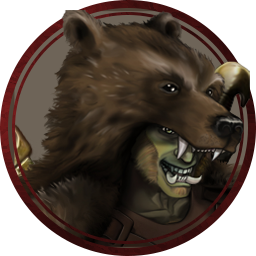
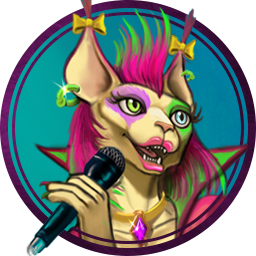
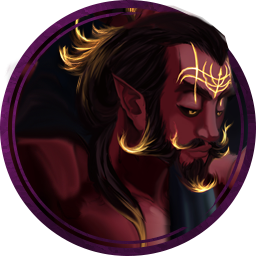
Free VTT Pop-Out Token with every commission

Like What You Read?
Commissions are open. Book your character through my queue.
Leave a Reply